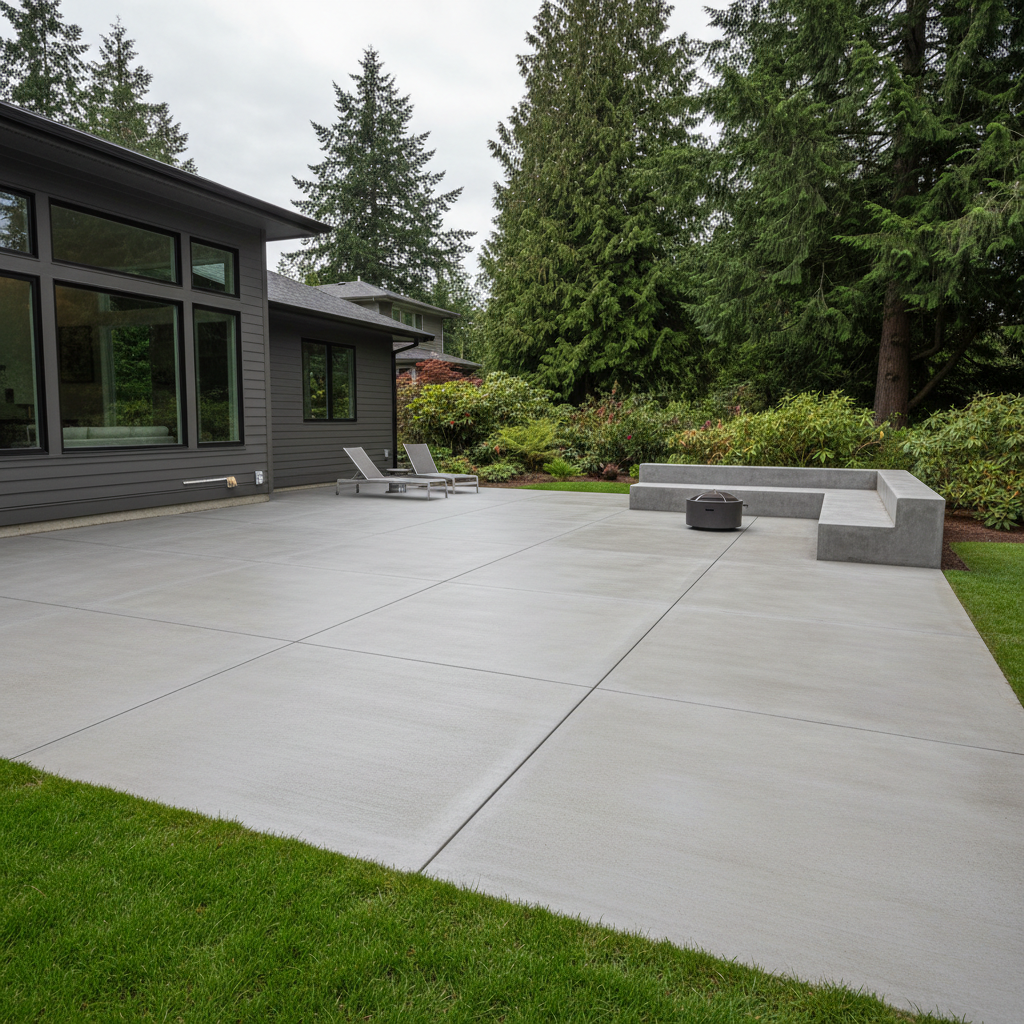
You want a new concrete patio. Great! It's a fantastic way to upgrade your outdoor living space, especially with our beautiful Kirkland summers. But before you start looking at stamped patterns or color options, let's talk about some of the most common, and often expensive, mistakes I see homeowners make when they're planning or hiring for these projects.
Mistake #1: Focusing Only on the Lowest Bid
I get it. Everyone wants a good deal. But when it comes to concrete, the cheapest bid is rarely the best deal. I've seen it time and again: a homeowner goes with the lowest price, and six months later, they're calling me to fix cracks, poor drainage, or a finish that's already flaking. Concrete isn't like buying a toaster; it's a permanent fixture on your property. You're paying for materials, labor, expertise, and the long-term integrity of the work.
A low bid often means corners are being cut. Maybe they're using cheaper aggregate, skimping on the base prep, or rushing the pour. Or worse, they're not properly insured, leaving you liable if something goes wrong. Always ask for detailed quotes, not just a number on a napkin. Understand what's included and what's not. If one bid is drastically lower than the others, there's usually a reason, and it's rarely a good one for you.
Mistake #2: Skipping Proper Site Preparation and Drainage
This is huge, especially here in Kirkland. We get a lot of rain, and our soil, particularly the clay-heavy stuff you find in areas like Juanita, can be tricky. If your contractor doesn't properly prepare the sub-base – that's the ground underneath your concrete – you're asking for trouble. We're talking about settling, cracking, and water pooling.
A good contractor will excavate to the right depth, ensure proper compaction, and lay down a suitable gravel base. They'll also consider drainage. You don't want water running back towards your house or pooling on your new patio. We always make sure the patio has a slight slope away from your home, directing water where it needs to go. It sounds basic, but you'd be surprised how often this gets overlooked by less experienced crews.
Mistake #3: Not Checking References or Licensing
This seems like a no-brainer, but people still skip it. Before you hire anyone, ask for references. Call those people. Ask about their experience, if the project finished on time and on budget, and if they'd hire the contractor again. Also, verify their licensing and insurance. In Washington State, contractors need to be registered with the Department of Labor & Industries. An unregistered contractor is a massive red flag. If they're not licensed and insured, you're taking on all the risk if there's an accident or shoddy work.
At New Look Concrete Solutions, we're always happy to provide our license numbers and references. It's part of doing business the right way.
Mistake #4: Not Having a Clear Vision (or Communicating It)
You might have a general idea of what you want, but have you really thought through the details? What size do you need? What shape? What kind of finish – broom, exposed aggregate, stamped, colored? Where will furniture go? Do you want steps? A fire pit? The more specific you can be, the better your contractor can deliver what you envision. Don't assume they can read your mind.
Bring pictures, draw sketches, walk them through your ideas. A good contractor will ask you a lot of questions to make sure they understand your vision. If they don't ask many questions, that's another red flag. Clear communication upfront prevents misunderstandings and costly changes down the line.
Mistake #5: Ignoring the Contract Details
Once you've picked a contractor, you'll get a contract. Read it. Every single word. It should detail the scope of work, materials to be used, timelines, payment schedule, warranty information, and what happens if there are changes or unforeseen issues. If something isn't clear, ask for clarification. If it's not in writing, it doesn't exist.
Don't just sign something because you're excited to get started. A solid contract protects both you and the contractor. It sets expectations and provides a roadmap for the project.
Building a great concrete patio isn't rocket science, but it does require attention to detail and working with someone who knows what they're doing. By avoiding these common mistakes, you'll be much more likely to end up with a beautiful, durable patio that you'll enjoy for years to come.