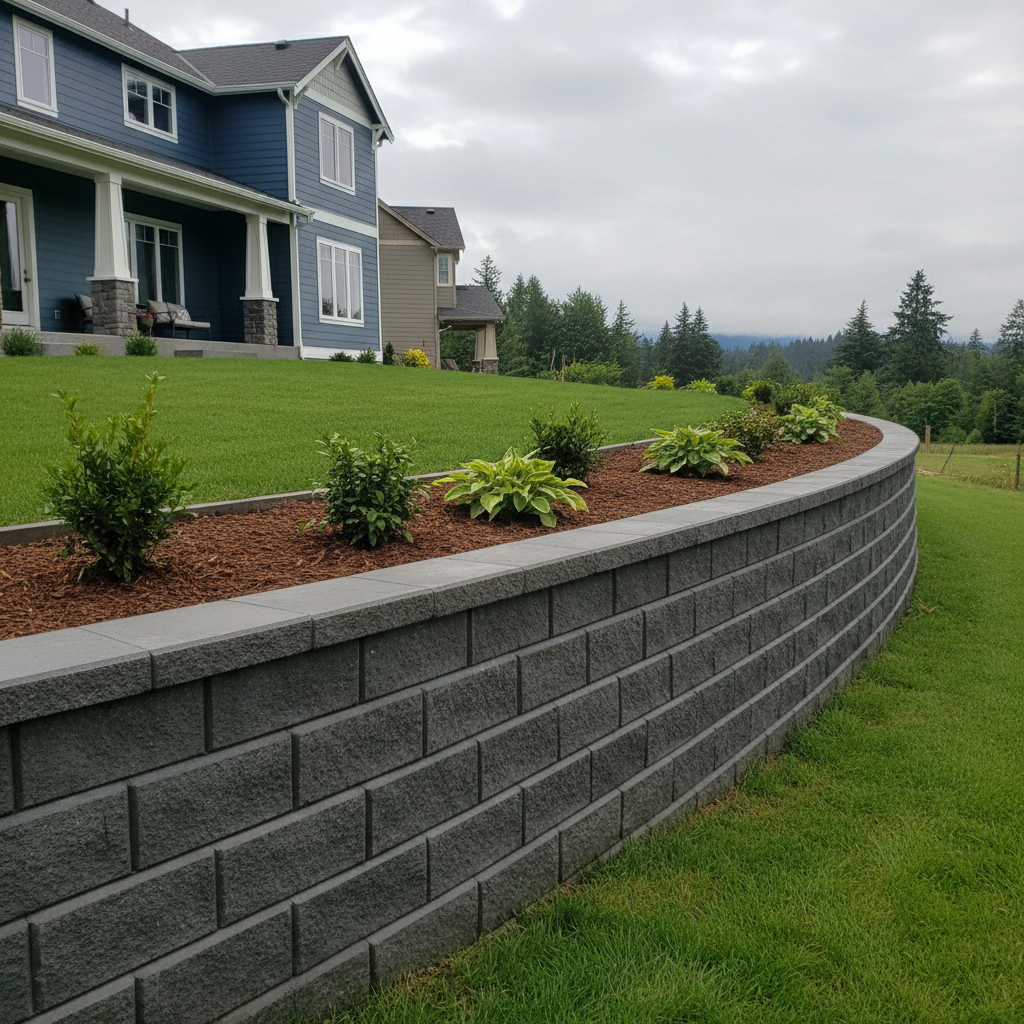
Thinking about putting in a concrete retaining wall? Good idea. They're strong, durable, and when done right, they look fantastic. But I've been doing this for a long time, and I've seen plenty of projects go sideways because folks just didn't know what to look out for. Here in Kirkland, especially with all the sloped lots and that Puget Sound rain, getting it wrong can be a real headache and a drain on your wallet. Let's talk about the biggest mistakes I see homeowners make.
Mistake #1: Skipping the Site Assessment (or a Proper One)
This is probably the biggest one. You might think, "It's just a wall, how hard can it be?" Well, it's not just a wall; it's holding back tons of earth and water. I've had calls from people whose walls were leaning after a big winter storm, and it almost always comes back to not understanding the ground they're building on. You can't just eyeball it.
Here's what a good contractor, like us at New Look Concrete Solutions, will do: We'll look at your soil type. Is it sandy? Clay? Is there a lot of organic matter? We check the drainage patterns on your property. Where does the water go when it rains heavily? Is there a natural spring or a high water table? We also consider the slope of the land above and below the proposed wall. All these factors dictate the design, the foundation, and the drainage system needed. If a contractor just gives you a quote over the phone without even stepping foot on your property to assess these things, that's a massive red flag. They're guessing, and you'll be paying for their guess.
Mistake #2: Ignoring Drainage – The Silent Killer
This goes hand-in-hand with the site assessment. Water is the enemy of any retaining wall. If you don't manage it properly, it will build up behind the wall, creating immense hydrostatic pressure. That pressure will eventually push your wall over, crack it, or cause it to bulge. I've seen it happen even on brand-new walls.
A proper retaining wall needs a robust drainage system. This usually involves a perforated pipe (a 'French drain') laid at the base of the wall, backfilled with gravel, and covered with filter fabric to prevent soil from clogging it. The pipe needs to daylight somewhere or connect to a storm drain. If your contractor isn't talking about drainage, isn't showing you how they'll incorporate it into the design, or tries to cut corners here, you're looking at a future repair job. Especially in areas like Rose Hill, where we get a lot of runoff from higher elevations, drainage is non-negotiable.
Mistake #3: Picking a Contractor Based Solely on Price
Look, I get it. Everyone wants a good deal. But when it comes to something as critical as a retaining wall, the cheapest bid is almost never the best one. I've seen folks go with the lowest price, only to have the wall fail a year or two later. Then they're paying me to tear out the bad work and build a new one, which ends up costing them twice as much.
Here's what to watch out for:
- Quotes that are significantly lower than everyone else's. There's usually a reason, and it's rarely a good one. They might be cutting corners on materials, labor, or permits.
- No detailed proposal. A good contractor will give you a clear breakdown of materials, labor, timeline, and what's included (and excluded). If it's just a number on a napkin, walk away.
- Lack of licensing and insurance. Always, always, always verify their license and make sure they're insured. You don't want to be liable if someone gets hurt on your property or if they damage something.
- No references or portfolio. Ask for pictures of their past work and contact information for previous clients. A reputable contractor will be proud to show off their projects.
Mistake #4: Skipping Permits and Engineering
This is a big one that can cause huge headaches down the line. In Kirkland, any retaining wall over four feet tall (measured from the bottom of the footing to the top of the wall) usually requires a permit and often an engineered design. Even shorter walls might need one depending on the load it's holding or if there's a structure nearby.
Why is this important? The city wants to make sure the wall is safe and won't fail, causing damage to your property or a neighbor's. An engineer will assess your specific site conditions and design a wall that meets safety standards. If you build without a permit, the city can order you to tear it down, fine you, or refuse to issue permits for future work on your property. A good contractor will guide you through the permitting process and tell you upfront if an engineer is needed. If they tell you,