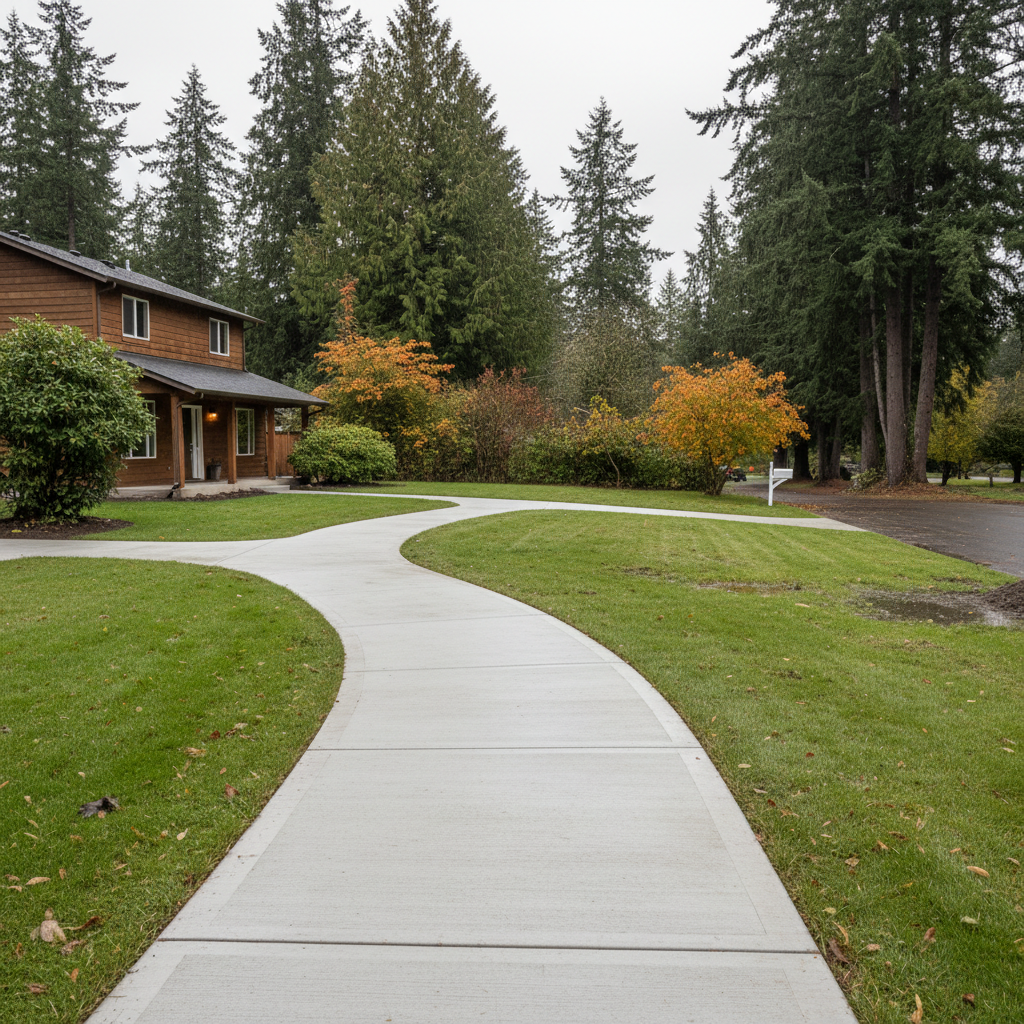
Thinking about repairing or replacing your concrete sidewalks? Good. It's a smart investment in your home's curb appeal and safety. But here in Kirkland, you can't just pour concrete whenever you feel like it. Our climate plays a huge role in how well that concrete sets, cures, and lasts.
The Best Time to Pour Concrete in Kirkland
When's the sweet spot for concrete work? For us, it's generally late spring through early fall. Think May through September. You want consistent temperatures, ideally between 50 and 80 degrees Fahrenheit, and not too much rain. That gives the concrete the best chance to cure slowly and strongly, without cracking or scaling.
- Spring (May-June): This is often ideal. The ground has thawed, temperatures are rising but not scorching, and we usually get a good mix of sun and moderate rain. Just watch out for those unexpected cold snaps or heavy downpours that sometimes sneak in.
- Summer (July-August): Also great, especially if we get a nice dry spell. The heat helps the concrete dry, but it can also dry too fast if you're not careful. We take precautions like misting and using curing compounds to manage that.
- Early Fall (September): Can be good, but you're starting to race against the clock. The days get shorter, nights get cooler, and the risk of frost increases. If you're pushing into October, you're really gambling with freezing temperatures that can ruin a fresh pour.
What you absolutely want to avoid is pouring concrete when it's freezing or when there's a high chance of a hard freeze within the first few days of the pour. Water in the mix expands when it freezes, and that'll just destroy the concrete's integrity before it even has a chance to get strong. We've seen plenty of sidewalks in older Kirkland neighborhoods, especially those up on Rose Hill, that show the signs of being poured in less-than-ideal conditions, leading to premature spalling and cracking.
Weather Conditions That Affect Concrete Work
It's not just temperature; other weather factors really matter too.
- Rain: A light drizzle isn't the end of the world, but heavy rain can wash away the cement paste, weaken the mix, and leave you with a soft, crumbly surface. We always keep an eye on the forecast and won't pour if heavy rain is expected.
- Wind: High winds can dry out the surface of the concrete too quickly, leading to plastic shrinkage cracking. We'll often use windbreaks or apply a curing compound sooner to combat this.
- Humidity: Low humidity combined with high temperatures and wind is a recipe for rapid drying and cracking. High humidity slows down drying, which can be good, but too much can also extend the curing time significantly.
As a local contractor, New Look Concrete Solutions is always checking the specific microclimates around Kirkland. Sometimes, a spot near Lake Washington will have different conditions than a property further inland on Finn Hill.
Protecting Your Concrete Sidewalks Year-Round
Once your new concrete is in, you want it to last. Here's how to protect that investment:
- Curing is Key: For the first week or so, keep that concrete moist. We'll use curing compounds or cover it with plastic sheeting. Don't let it dry out too fast.
- Seal It: After about 28 days, once the concrete is fully cured, apply a good quality concrete sealer. This is your first line of defense against moisture, de-icing salts, oil, and general wear and tear. You'll want to reapply it every 2-5 years, depending on the product and traffic.
- Avoid De-Icing Salts: If you can, use sand or non-chloride de-icers in winter. Rock salt (sodium chloride) and other chloride-based de-icers can be really harsh on concrete, causing scaling and pitting over time.
- Clean Regularly: Sweep off debris, leaves, and dirt. Pressure wash occasionally to remove grime and moss, which loves to grow in our damp climate. Just don't use too high a pressure setting, or you could damage the surface.
- Address Cracks Promptly: Small cracks can turn into big problems if left unchecked. Use a good quality concrete caulk or crack filler to seal them up and prevent water from getting in and freezing.
Taking a little care goes a long way. You've invested in a durable surface, now make sure it lives up to its potential. If you've got questions about your Kirkland sidewalks or need a hand with repairs, you know who to call. We're always happy to give you an honest assessment.