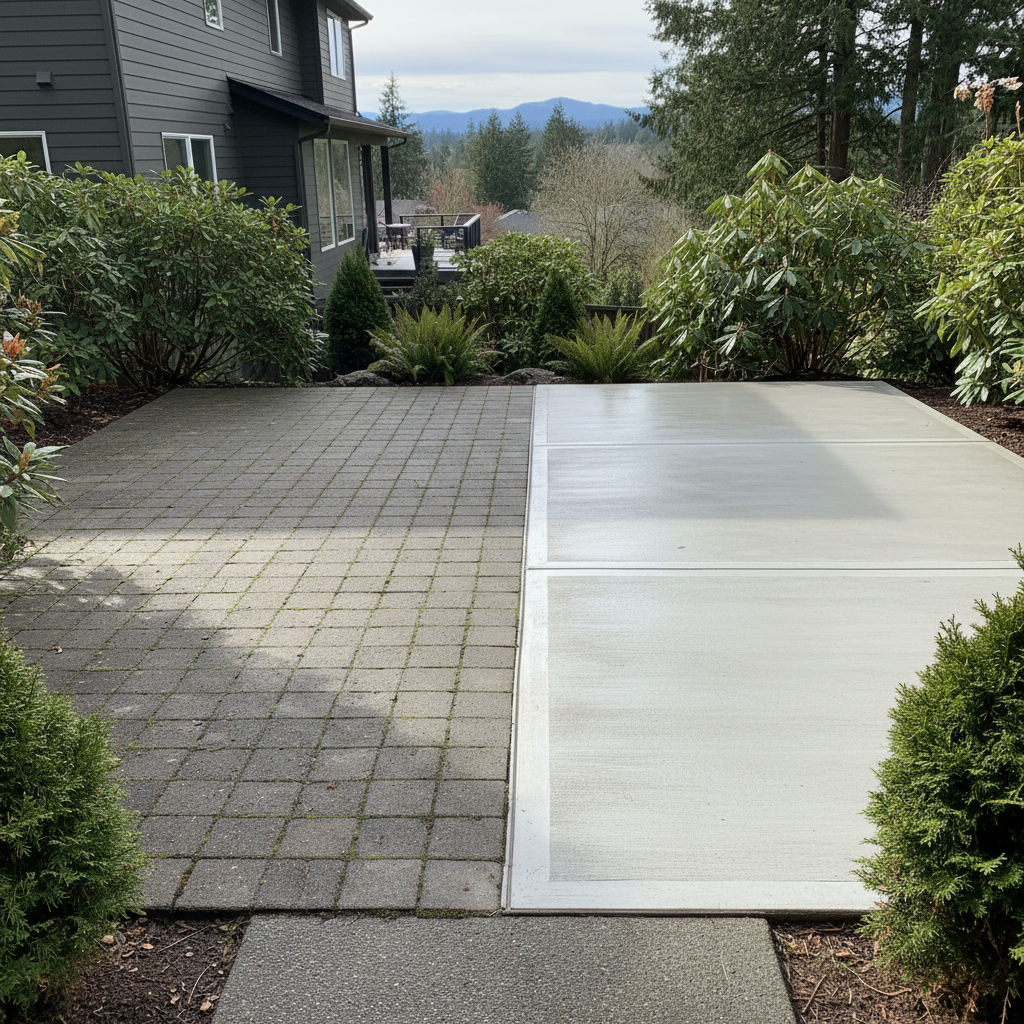
Alright, let's talk patios. You're looking to upgrade your backyard, maybe add some usable outdoor living space, and you're probably weighing your options. Two big ones always come up: good old poured concrete, or interlocking pavers. As a contractor who's seen a lot of both go in around Kirkland, I can tell you there are some pretty clear pros and cons to each, especially with our specific climate and soil.
Initial Cost: What Hits Your Wallet First?
Let's get right to it: cost. Generally speaking, a standard poured concrete patio is going to be less expensive upfront than a paver patio of the same size. You're paying for materials and labor, and while concrete isn't cheap, pavers involve more labor for installation. Each paver needs to be laid individually, leveled, and then the whole thing needs to be compacted and joint sand swept in. With concrete, once the forms are set and the base is prepped, the pour itself is relatively quick. So, if you're on a tighter budget and just need a solid, functional surface, poured concrete usually wins on the initial price tag.
Durability and Longevity: How Long Will It Last?
This is where things get a bit nuanced. A properly installed poured concrete patio, with good rebar or wire mesh and the right mix, is incredibly durable. It'll stand up to heavy use, furniture, and our Pacific Northwest weather for decades. The biggest enemy of concrete is cracking, which can happen due to ground movement, improper curing, or freeze-thaw cycles. We see a lot of clay soil around Kirkland, especially in areas like Juanita, which can expand and contract with moisture, putting stress on concrete slabs. Good base prep and control joints are crucial here.
Pavers, on the other hand, are designed to move. They're individual units, so they can flex with minor ground shifts without cracking. If one paver gets damaged, you can usually pull it out and replace it. This flexibility is a huge advantage in areas with unstable soils. They're also incredibly strong; you see them used in commercial applications all the time. The main durability concern with pavers is shifting or settling if the base isn't prepared correctly, or if the edge restraint fails. But generally, both options, when installed right, will last a very long time.
Maintenance: What's the Upkeep Like?
This is a big one for homeowners. Poured concrete is pretty low maintenance. You'll want to clean it periodically, maybe power wash it once a year to remove moss and dirt, and seal it every few years to protect it from stains and moisture. If you get a crack, you can try to patch it, but it's tough to make those repairs invisible. Stains can be an issue if not sealed, but overall, it's a 'set it and forget it' kind of surface.
Pavers require a bit more attention. Weeds can grow in the joints between pavers, especially in our damp climate. You'll need to sweep in new joint sand occasionally, and possibly use a polymeric sand that hardens to deter weeds and ants. Moss can also be a problem on pavers, just like concrete. Cleaning involves sweeping, power washing, and sometimes reapplying joint sand. If you have a damaged paver, replacement is straightforward, but it's still a task.
Appearance and Aesthetics: What Look Do You Want?
This is where personal preference really comes in. Standard gray poured concrete can look a bit utilitarian, but you can dress it up. We can stamp it to mimic stone or brick, stain it with various colors, or even expose the aggregate for a textured, natural stone look. The options for decorative concrete are extensive, allowing for a seamless, custom design that flows with your home's architecture.
Pavers offer a different kind of aesthetic. They come in a massive range of colors, shapes, and textures. You can create intricate patterns, borders, and designs that add a lot of visual interest and curb appeal. The segmented look of pavers is inherently more 'finished' than plain concrete for many people. If you're going for a very specific Old World, rustic, or highly patterned look, pavers might be the easier way to achieve it without specialized concrete techniques.
My Recommendation for Kirkland Homeowners
So, what's my take for folks living right here in Kirkland? Honestly, it often comes down to budget and desired aesthetic. If you're looking for the most cost-effective, durable, and relatively low-maintenance option that still offers plenty of design flexibility, a well-installed poured concrete patio with some decorative finishing is often the way to go. You get a solid, continuous surface that handles our rain and occasional freezes beautifully, and with New Look Concrete Solutions, we can make it look fantastic with stamping, staining, or exposed aggregate.
However, if your budget allows for it, and you absolutely love the segmented, intricate look of pavers, or if you're particularly concerned about future ground movement and prefer the ease of individual paver replacement, then a paver patio is a fantastic choice too. Just be prepared for a bit more maintenance in terms of weeding and joint sand. Both are excellent choices when done right, but for overall value, durability in our climate, and ease of care, I often lean towards a quality poured concrete slab with some character.
```