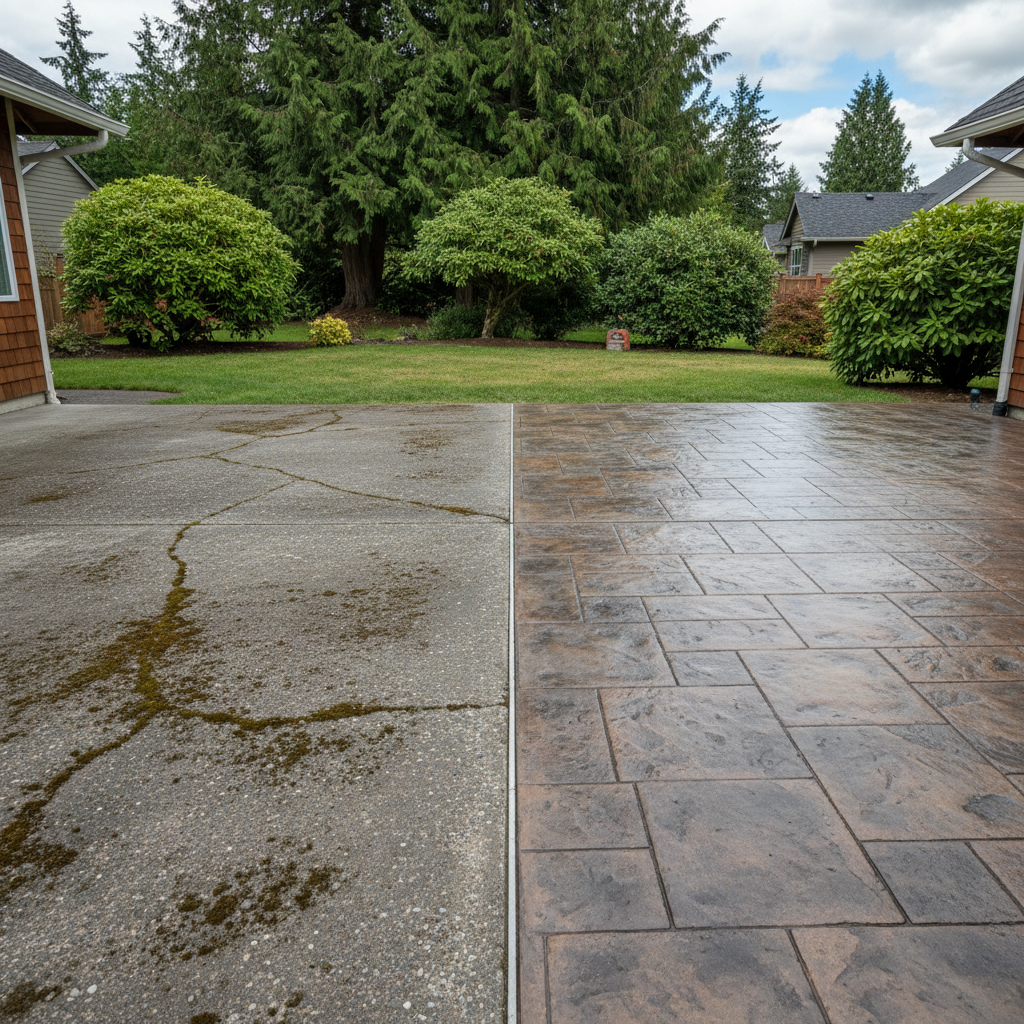
So, you're thinking about sprucing up your outdoor space or maybe even an interior floor with some decorative concrete. That's a smart move; it adds a ton of curb appeal and can really transform a plain slab into something special. But then you hit the wall: stamped concrete or stained concrete? It's a common question I get from folks all over Kirkland, from the older homes in Juanita to the newer builds up on Finn Hill.
As a concrete guy who's been doing this for years, I've seen both options used well and, frankly, not so well. Let's cut through the marketing jargon and talk about what these two really mean for your home, your wallet, and how much work you'll have to put in down the line.
Stamped Concrete: The Look of Luxury, The Strength of Concrete
Stamped concrete is all about mimicking other materials. Think stone, brick, wood planks, even natural rock formations. We do this by pouring fresh concrete, adding color to it (either integral color mixed in or broadcast on top), and then pressing large, flexible mats with patterns into the wet concrete. Once it's cured, we apply a release agent and then seal it. The result can be incredibly realistic, fooling a lot of people into thinking it's the real deal.
The Good Stuff:
- Appearance: It's hard to beat the visual impact. You can get really intricate patterns and textures that look high-end. Want a cobblestone patio without the uneven surface? Stamped concrete delivers.
- Durability: It's concrete, so it's tough. When installed right, it can handle heavy foot traffic, patio furniture, and even vehicles if it's a driveway.
- Value: It definitely adds value to your property. It's a significant upgrade from plain concrete and often costs less than installing natural stone or pavers.
The Not-So-Good Stuff:
- Cost: This is generally the more expensive option upfront. It's a labor-intensive process, requiring skilled installers and specialized tools. You're paying for that artistry and complexity.
- Installation Complexity: It's not a DIY job for most. Timing is everything; you've got to work fast while the concrete is still pliable.
- Maintenance: It needs regular sealing, usually every 2-3 years, to protect the color and finish. If the seal wears down, the color can fade, and the surface can become more susceptible to wear. Also, if a section gets damaged, repairs can be tricky to blend seamlessly.
Stained Concrete: Color That Penetrates
Stained concrete, on the other hand, isn't about texture; it's about color. We apply a chemical stain (acid-based or water-based) to an existing concrete slab or a newly poured one. Acid stains react with the minerals in the concrete, creating translucent, variegated effects that look a lot like natural stone or marble. Water-based stains offer a wider range of colors and more uniform coverage, though they don't have the same reactive depth. Once the stain is applied and neutralized (for acid stains), it's sealed to protect the color and add shine.
The Good Stuff:
- Appearance: It creates a beautiful, translucent, often mottled look that's unique to each slab. No two stained floors are exactly alike. It's fantastic for a natural, earthy aesthetic or a modern, industrial vibe.
- Cost: Generally, staining is more budget-friendly than stamping, especially if you're working with an existing, well-prepped concrete slab.
- Durability: The color penetrates the concrete surface, so it won't chip, peel, or fade like a topical paint. It's incredibly long-lasting.
- Maintenance: Like stamped concrete, it needs sealing, but the color itself is very durable. If the sealer wears off, the color underneath is still there.
The Not-So-Good Stuff:
- Surface Condition Matters: Stains highlight imperfections. If your existing concrete has cracks, patches, or severe discoloration, the stain will show it all. Surface prep is critical.
- No Texture: You won't get the dimensional texture of stamped concrete. If you want a stone look, you'll get the color variation, but not the feel.
- Limited Color Control (Acid Stains): Acid stains react uniquely with each slab, so while we can guide the color, the exact final shade can have some surprises. Water-based offers more predictable results.
Which One is Right for Your Kirkland Home?
Here's my honest take, especially considering our climate here in Kirkland. We get a lot of rain, and while it's not usually extreme, moisture management is always a factor for outdoor surfaces.
If you're after a high-end, realistic imitation of natural stone or wood for a patio, walkway, or even a driveway, and your budget allows for it, stamped concrete is a fantastic choice. It really elevates the visual appeal and can make your outdoor living space feel like a resort. Just be prepared for that regular sealing to keep it looking sharp, especially with our wet winters and the occasional moss growth in shaded areas.
However, if you're looking for a beautiful, unique color treatment for an existing slab, want a more modern or organic feel, or you're working with a tighter budget, stained concrete is incredibly versatile and durable. It's particularly great for interior floors, garage floors, or outdoor areas where you want rich color without the texture. It's also a bit more forgiving in terms of long-term color degradation if you miss a sealing cycle, as the color is embedded.
For most homeowners in Kirkland, especially those with existing concrete in decent shape, I often lean towards stained concrete for its cost-effectiveness and the unique, deep colors it can achieve. It's a great way to revitalize a space without the full tear-out and replace. But if you're pouring new concrete and want that 'wow' factor of a perfectly replicated stone patio, stamped is tough to beat.
Ultimately, it comes down to the look you're going for, your budget, and the condition of your existing concrete. Either way, when done right by a pro like us at New Look Concrete Solutions, both options will give you a beautiful, long-lasting surface that you'll enjoy for years.